Sabtu, 06 Agustus 2011

5 Minutes With John Bartlett


Apart from being a genuinely lovely guy, John Bartlett is an extremely talented designer and dedicated supporter of the North Shore Animal League. Bartlett launched his label in 1992 and his success earned him two CFDA awards and a Perry Ellis Men's Wear award. He then expanded into womenswear in 1997 using luxurious Italian fabrics echoing other American designers like Halston and Bill Blass with the use of clinging jersey dresses and sharp tailored jackets. In 2000, Bartlett dropped out of the fashion business for a short time, making a comeback in 2003 with a small collection of menswear, which he showed at the Harvard Club. Bartlett opened his first store in New York's West Village in 2007 and in 2008 he was appointed Liz Claiborne's Creative Director for their men's sportswear line. Bartlett continues to grow his signature menswear line and recently entered the e-commerce arena.


Q1. What was the first record that you bought and how did it change your life?


The first album I bought as a youth was BAD COMPANY and I think it was around 1973...I played it over and over again on my plastic record player in the basement. This was the first rock album I had and some of the songs are still on my favorite playlist on my iPod. This music changed my life in that I quickly started to listen to Led, Tull, and Fleetwood Mac. I thought I was totally groovy in my flared cords and David Cassidy haircut.


Q2. You are a big supporter of the North Shore Animal League. How did you get involved?


When I turned 40 I visited the North Shore Animal League looking for a rescue and I met my sweet boy Tiny Tim, who was a tripod. He had lost his leg in a car accident and rescued from another shelter where euthanasia is common and brought to North Shore. His leg was amputated on Xmas Eve and therefore he earned the name Tiny Tim after the Dicken's character. when I opened my store Tim became my unofficial logo and now I have launched a complete online collection with his image to help raise money for rescue dogs everywhere. Please check it out at www.johnbartlettny.com. I have done several adoption events at my store with North Shore and I am now starting a Tiny Tim rescue fund to help raise money for independent rescue groups who are pulling from the high risk municipal shelters.

Q3. You recently announced that you've become vegan and will no longer use leather in your collections. Would you agree that it is relatively easy for all designers to find credible, aesthetically pleasing alternatives to leather and fur and more of us should follow in the footsteps of designers like yourself and Stella McCartney?


I feel that the fashion community is caught up in the illusion of "luxury" and many designers feel the need to use fur and leather to speak to a more expensive customer. If you look at Stella's work, the quality is incredible and she is able to create high fashion without contributing to the suffering of animals. I chose to become vegan after the incredibly upsetting return of fur on many runways. I could not understand the disconnect and why people who say they love animals work in fur especially. I started to speak out against the fur industry and wanted to be very clear about my stance, so I discontinued using leather. I am not completely convinced about fake fur as it promotes the look of fur and may send the wrong message. I do think that faux leather shoes and belts are important especially for professional men and women who may not be able to wear canvas gym shoes to work. My feeling is that it is time for the fashion community to recognize their responsibility on a global level. Fur and leather manufacturing is very damaging to the environment and I applaud anyone in fashion who is seeking alternatives that better serve the animals, the earth and our industry's progress.


Q4. Online media and e-commerce have changed the way we receive information and shop. What in your opinion are the pros and cons of the online world?


I just launched my own online store as I mentioned above and I am blown away at the ease with which I can maintain it. I do feel that many people are drawn to the web and prefer shopping from home. I am excited by the future of online shopping as well as the future of social media and its effect on internet shopping and communication.


Q5. You often say that at Harvard you studied night clubbing whilst at Harvard. Can you share a fun 80's nightclubbing story?


Gosh, I don't have any particular story per se...while most of my fellow students were studying I gathered a great deal of my education from being out in the nightclub world. As a sociology major I realize now that the combination of my sociology background and being out in boston at the clubs was a great preparation for a career in fashion. One of my favorite clubs was called SPIT and on tuesday night it was a very cool mixed crowd new wave night. I liked to wear a mailbag as a skirt and lots of brooches and salvation army clothes...such a blast.


http://www.johnbartlettny.com/


http://www.animalleague.org/

Kamis, 04 Agustus 2011

5 Minutes With Stylesight


Shannon Davenport is the Youth Market Editor from Stylesight (www.stylesight.com), the most trusted name in trend, providing world-class content, tools and technology for creative professionals in the style and design industries, combines accurate forecasting and expert trend research with cutting edge-technology to make the creative journey faster, more efficient and cost-effective - the industry's first and only “Creative Platform.”

Q1. When I was a kid I looked for aesthetic inspiration in The Face, i-D and Blitz magazine in the UK and Details and maybe Interview in the USA. Now there are so many style blogs, is it possible for a youth trend to develop in to something substantial away from the glare of the media anymore?

I think there definitely is. Still with most publications the focus is on high-end fashion. Even if the focus of the particular magazine is on edgier, emerging designers, the clothing and styling remains aspirational, and almost always expensive. Although there is a larger focus and awareness on fashion in the mind of young people today, that still doesn't mean there is accessibility. What interests me most is seeing how DIY tutorials get spread among young people on the Internet. They evolve and take on their own creativity and get people thinking about how to make and construct clothing. It goes beyond trying to bleach your own Dries Van Noten jeans and into a community of young people that are really having fun with fashion, materials and trends.


Q2. In the last few years there have been so many fashion designers and brands jumping on the 'music' bandwagon-I always say that real rock & rollers don't wear beige. Do you think the consumer can spot the fakes from the real thing and do you agree that this whole music/fashion thing is just tired now?
Florence Welch - She has one foot in fashion and the other foot in music. Thank God her both hands are free so she can point at herself.
It's funny because now there are a lot of artists who are marketed specifically towards the "fashion crowd" but they usually don't stick around for long. You can put a young new singer in head to toe labels but If people know an emerging musician more for doing campaigns and fashion collaborations than their actual songs, there is a definitely a time limit on how long that can stay interesting. Ultimately what has weight is authenticity and I do believe people can spot it from a mile away. Some singers like Lykke Li and Florence Welch can have a foot in both the fashion and the music world but its a delicate balance and its been pushed so hard lately, that often the most refreshing music comes from a disassociation with being "stylish."
El Tel. The ultimate in ironic facial topiary. And like it or not, it's here to stay.

Q3. Do you think we are moving into a post ironic facial hair and ironically bad clothing age or are men going to continue walking around looking like Terry Richardson and Dov Charney?

Like it or not I think irony is still alive on the streets, its something that people can't seem to get enough of. Some people have moved past it, but there's a whole 90s obsession these days that is fixated on some of the craziest items that decade had to offer. Scrunchies, Looney Tunes graphics, platform sneakers, and all of the out-there fads of the 90s are being worked back into current looks, for better or for worse.

Nicola Formichetti - He's Horny

Q4. I regularly hear people say that stylists and celebrities have replaced designers in the fashion world, which being a trained designer I take exception to. However it does seem that the likes of Nicola Formichetti are getting more props than many designers these days. Do you think it is important for a designer to actually sketch or know the thread count of a fabric anymore?

Yes, because technical knowledge will always be the foundation of well-designed clothing, but again, I think authenticity is key. People like Mary Kate and Ashley Olsen weren't taken super seriously when they started out and over time they've proven to be pretty successful and dedicated to their various clothing businesses. I think designers can come from anywhere and sometimes people without formal backgrounds in fashion have the most unique approach to clothes. On the other hand however, there can be complete disasters like the Lindsay Lohan Ungaro debacle. People do have to prove dedication and knowledge, being famous or having a fashionable wardrobe isn't always quite enough.
The super serious Mary-Kate Olsen.

Q5. Where do you think the best street style will be coming form in the next decade?

Every area has their own regional approach to the way they dress and that's what keeps things interesting. To choose a particular city would be a matter of taste but I'd say Scandinavia in general has amazing style. The looks in Iceland as well are also really chic but have interesting, individual twists. I like the way people in LA are playing around with grungy-surfer looks right now and London is definitely into club kid style this year. It's interesting despite the shared information on the internet, how specific countries and cities continue to maintain distinct identity.

http://www.stylesight.com/

Rabu, 03 Agustus 2011

5 Minutes with Marcus K Jones

Marcus K. Jones, an NYU Film School Alumnus, began his career as a Fashion Cinematographer editing video for Christian Dior, Estee Lauder, Omega, RADO, and Bedat. Currently, Marcus creates Campaign Video and Branded Films exclusively for the Fashion industry. His tuned eye for beauty and clothing builds trust with most discriminating clientele.


Q1. What was the first record that you bought and how did it change your life?


A1. The first record that I bought was Wreckx-N-Effect's self-titled album. Other than worrying my parents, it had no effect on me. The first record that did change my life came later: System Upgrade by Dieselboy! It's get-stuff-done music. Then, for any complex visual pattern that exists, I'm pretty sure that I find an audio analog in that album. Not to mention the frantic, occasionally arrhythmic, always aggressive themes present throughout that album that paint a picture of my creative process. But what does this mean?


Q2. How did you begin your career?


A2. I began my career as a video editor for a boutique post-house, Manno Media, that catered to fashion and lifestyle brands such as Christian Dior, Givenchy, Guerlain, Estée Lauder, MAC, Omega, Rado, Swatch and many others in those families. During the time spent, I acquired a thirst for creating such imagery. The transition from editor to Director/DP, which I actually studied at Tisch, was natural.


Q3. You are executive producer of the feature documentary ‘The Tents’. Can you tell me a little bit about the film and how it came together?


A3. The Tents grew out of relationship fostered thru old Dior connects with Harper's Bazaar. James Belzer, the director of the documentary, worked at Harper's during the time where I used every channel open to enter the fashion industry as a Director/DP. Belzer is the greatest strategist I've ever known. He convinced me to DP his first documentary called Coming of Age In Cherry Grove, in exchange for valuable introductions in his industry. He also insisted that I accept press credentials from Harper's to gain access to Mercedes Benz Fashion Week at Bryant Park three seasons before it all ended. At the time, neither of us had any idea that we were going to create a documentary. James just thought it would be a good way for me to meet new people. I hated it. My RED Camera was way too heavy and it was impossible to start a casual conversation on the floor of the tents while babysitting a $30,000 camera. As history would have it, buzz about the tents leaving Bryant Park ran ramped. James and I had a very short conversation, and concluded together that we must turn the story into a documentary. But how could we get past the rehearsed soundbites that designers give to no-name documentarians like myself? Marie Griffin of Griffin PR managed television interviews for many of the top designers in the tents. She took pity on the obvious fact that I was a newbie backstage, and moved me to the front of the line. When James and I decided to co-executive produce the documentary, we made her our first subject, and she opened the doors to interviews with her clientele. James having the in-depth knowledge of the fashion industry said, there is no story unless we start with Fern Mallis and Stan Herman. They accepted, and the rest is history.


Q4. What's your favorite 'style' film and why?


A4. The movie Inception is my favorite hands down. It's what happens when an unique story, great actors, beautiful cinematography, amazing effects, fantastic styling of course, and engrossing sound come together. Draw me in and make me believe.


Q5. How do you think online information exchange is influencing fashion?


A5. Online information has influenced fashion in stages. With the late 90s popularization of the web and subsequent rise of youtube, there grew an opportunity for brands to show another side of themselves. Their audiences were able to access more information about the brand's heritage and/or process. Often that information was accompanied with behind the scenes videos. Smaller brands were also able to access consumers thru a web presence that was more affordable than having a number of brick and mortar stores. Finally the ability to shop online, trained the consumer to become more action oriented when exploring online fashion. This action oriented consumer in return gave brands incentive to further enrich their online presence and so on. This was the fashion ecosystem at the time of the social media explosion. Social media has thrown fashion into overdrive. There is no more effective way to date for a brand to reach their potential audience, than if a consumer recommends a brand or a brand experience to a peer whom they already know will be interested. Each social message made available by a brand for a consumer to pick up had a greater value than any previous form of one-directional advertising. At last, the question asked commonly by brands when considering new video content could be answered: Who is going to watch this video? Let's face the fact, Fashion Film is niche. It's a waste to pay for it and blast it out to an arbitrary audience via television or youtube. Fashion Film becomes valuable when it's viewed and shared socially to an organically consumer-selected audience whom there is a high probability of having high interest. In this scenario, Fashion Films spread like wildfire thru a targeted audience of brand lovers and enthusiasts. Fashion Films become a rewarding experience for a greater number of people whom otherwise may not have stumbled upon them without social media. Moreover, Fashion Films created by consumers or persons other than the brands close a feedback loop which may actually affect the minds of the designers themselves.


http://www.thetentsmovie.com/t/The_Tents_Trailer.html


http://www.vogue.it/en/people-are-talking-about/from-new-york/2011/06/marcus-k-jones-the-tents

5 Minutes with Gordon Richardson of Top Man


Gordon Richardson is Design and Product Development Director at Topman. After graduating from the Royal College of Art in 1976, having studied menswear design, he set up his own menswear label stocked at Harrods, Joseph and Fiorucci .Moving to Paris in 1978 to design womens accessories for Daniel Hechter he progressed to designer of the international menswear collection. He returned to the UK as the Design Director of Sabre International, taking up the post of Principal Lecturer of Fashion at Kingston University in 1986 for a period of 11years before commencing his career within one of the UK`s largest portfolio of high street brands-the Arcadia Group. Having worked on Burton, Principles for Men, Racing Green and Hawkshead as Design Director he commenced his current role within Topman in 2000. Defining the trends for each season with his design team and instigating designer collaborations his role is also to ensure that product development, garment production and subsequent marketing is completed to meet the high customer expectations.

Q1. What was the first record you bought and what effect did it have on you?

Pretty sure it was House of the Rising Sun by the Animals but it could also have been You Really Got Me by the Kinks, it was such a long time ago. I also remember having Keep on Running by the Spencer Davis group featuring a young Stevie Winwood in my collection around that time too, maybe a bit later, such a great voice.

The effect all these tracks had on me was pure magic and an opening to another world which I seized upon readily, learning the guitar and playing in local school bands desperate ( too desperate) to make it somehow. We all worked from our passion of the Blues upwards into different genres, entering Melody Maker competitions year after year with lots of different line ups and musical directions. Never made it, hence existing fashion career!

Also my parents in an endeavour to fuel my love of music always pre ordered the newest Beatles album which on arrival at boarding school we all you used to crowd round an old record player and listen in awe.

I remember our 1st band learning a lot of the Shadows instrumental tracks as a basis of how to play as a band before progressing to rock and roll which I'd still recommend to any band starting our t as a way of learning simple guitar melodies and structures..

Q2. When did you start designing clothes and who or what influenced you to do that?

Started out on more of an art journey , studying Graphics 'til in my inaugural year I did a one off fashion project that was set by the most exotic characters I'd ever met and my future was sealed. They were such a breath of fresh air, hailing from London, that exotic city (I was studying down south in Portsmouth, hardly cutting edge!) . One of them was dressed as Mickey Mouse , well that's how i remember it; any way they were definitely more exciting than the bearded older graphics tutors who all seemed to design credits for BBC show which I found infinitly boring.

Q3. As a designer do you consider yourself an evolutionist or a revolutionist?

An evolutionist with revolutionist tendencies. I've always loved the simplicity and functionalism of classic clothes with the challenge coming from making them look modern. I not a designer of three sleeves and twisty asymmetrical fashion although we have a little of that within our rock and roll AAA collection.

Q4. Top Man Ltd has been quite a success. Where did the idea for the collection originate and how will it develop?

Ltd came about from the need to design something more robust and straightforward than the busy full-on regular Topman fashion stance. Quieter and aimed the more discerning customer it came to fruition from a general conversation in the design room on where we all buy clothes and realising that Topman wasn't providing these types of clothes. Its been really successful and is rolling out to 50+ stores in the UK as we speak.

Its developed it's own aesthetic now, one of durable modern classics that have a premium edge and a slightly nostalgic feel.

Q5. Top Man launched in New York a couple of years ago. Are there plans for more US stores?

New York has matured into a successful store for Topman and we are due to open our second store in Chicago this September and a store in Vegas next March. So very exciting for us to have more presence in the States.

http://www.topman.com
http://us.topman.com

5 Minutes With Shien Lee


The creation of Shien Lee, Dances of Vice is a New York nightlife sensation which attracts a decadent menagerie of dandies, aesthetes, and dreamers who gather in shared enthusiasm for the music, fashion, culture, and beauty of times forgotten.

Dances of Vice incorporates a myriad of anachronistic and New Romantic influences in Dadaistic celebration of the liberating effects of beauty, fantasy and surrealism.

Q1. What was the first record that you bought and how did it change your life?

The first record I bought was "How We Quit the Forest" by Rasputina, an all-girl cello rock band with a dark Victorian aesthetic. I was a 13 year old goth kid and the music contained so many elements I loved then and continue to love today: surrealism, fairy-tale storytelling, creepy cello sonatas, absurdity, Victoriana. I was such a big fan of theirs growing up. I couldn't have imagined that, 10 years later, I'd be booking them to perform at my own event, Dances of Vice.

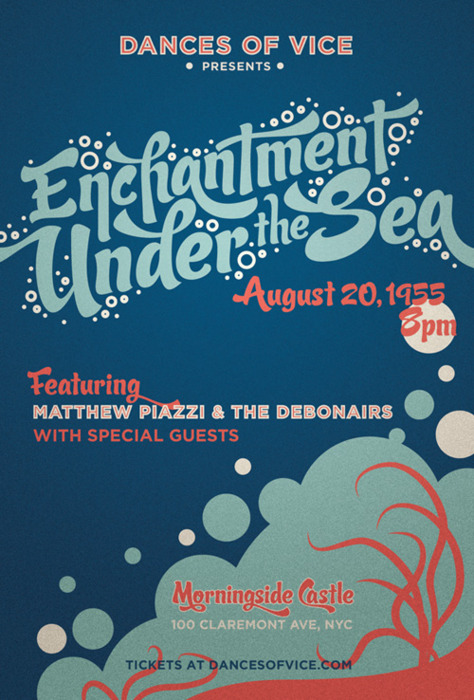
8/20: ENCHANTMENT UNDER THE SEA at Morningside Castle

Q2. What drew you to New York City?

I came to NYC to continue my graduate studies at TC Columbia University, but I was mostly eager to live in the city deemed the
culture capital of the world. There's a sort of sordid glamour to the city and its inhabitants, and I've had the good fortune to be inspired by a great many since my arrival 4 years ago. Many brilliant people come to New York to create and achieve with such urgency and ambition. I thrive on this energy - it's very stimulating and inspiring.

Q3. Dances of Vice is 'a New York nightlife sensation which attracts a decadent menagerie of dandies, aesthetes, and dreamers'. What inspired you to create Dances Of Vice?

The idea to create Dances of Vice began before I moved to NYC. I wanted to create a venue where lovers of anachronism, surrealism and aestheticism could meet other like minds in an environment that celebrates creative expression, rebellion, beauty, and communitas. If you visit the video/photo gallery on my website, I think you'll get a taste of what we're about.

Q4. Tell me a little about the Shien Lee Creative Group.

Shien Lee Creative Group was created to extend my event and PR services to the special events industry for corporate and private clients. I develop event concepts, branding strategies, and manage different levels of production. Since Dances of Vice took off, I've received requests to produce custom events for special occasions, so I draw on my experience in nightlife, PR and entertainment to produce one of a kind themed events for other organizations.

Q5. How do you think the internet and online and information exchange is influencing artistic expression?

They call our digital culture a "convergence culture" where ideas merge together and become homogenized. The internet is a great resource that presents a wealth of information at our fingertips, but it still requires an intelligent mind to search effectively, research deeply, and synthesize one's own creative ideas. Those who don't simply follow a trend by imitating what's been done - often poorly, at that. It's like any other source of information.. television, books, parents, teacher.. don't let it think for you. However, to state the obvious, the internet speeds up communication and productivity, disseminates information quickly, builds creative communities, keeps you up to date on latest news and innovations - it's very empowering for artists, and like any tool, its up to the user to use effectively.

http://www.dancesofvice.com
http://www.facebook.com/dancesofvice
http://www.twitter.com/DancesOfVice
http://www.shienlee.com/

Selasa, 02 Agustus 2011

Miss Piggy and Kermit as Sid And Nancy


Miss Piggy and Kermit as Sid And Nancy - Photo by Mike Ruiz. Clothes by KD studio

5 Minutes With Bruce Banter

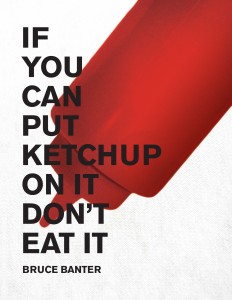
Bruce Banter is the author of 'If You Can Put Ketchup On It, Don't Eat It' / A Self Advice Book by Bruce Banter.


Q1. What was the first record you bought and how did it change your life?

The 1st album I remember owning in a really, this is mine stay away way, was Andraé Crouch and the Disciples’ / Take Me Back. Gospel. I played it as an LP in my room, as an 8 track or cassette in my car. I would road trip a lot to hear them play. Andre’ started in High School with Billy Preston, I saw him first on John Carson and last at Michael Jackson’s Staples Center Service. In the middle of that, it was his choir on Michael’s Man In the Mirror and Madonna’s Like A Prayer. He is the best – 8 Grammy’s, 6 Dove’s a Coke Bust and an Oscar Nom later, and I love Gospel.

Madonna - Like A Prayer

Q2. When did you begin work on your book and how did you formulate the initial idea?

It was an epiphanic accident. That moment where all of the fragments formed. Given an interest in God, and a damn about people I wanted to do something good. I wanted to write a dirty chicken soup for the soul that said fuck a few times and made you love a few folks more. “If You Can Put Ketchup On It Don’t Eat It” was my idea of a diet and an overriding strategy to solve big things simply. Inside the book you sidestep simple and find a smattering of morality based stories from the street.


Q3. Where did the pseudonym ‘Bruce Banter’ come from?

I’m a Retailer. My name is Weldyn and in a bookstore arranged by authors last names, mine would most likely end up on a low shelf in a dark corner. Banter on the other hand will slide in center stage on shelf 2. I play alliterations really hard when I write, nearly toward embarrassing, so the B.B. of Bruce Banter was a quick choice. Of course I would have preferred Bruce LaBruce but it was already in use.

Q4. You’ve had a long and varied career in the fashion industry. Where did it start and how did you get into the business?

By accident. I am working on a book about Salesmanship called “Wiggle Your Big Toe”. Chapter 1 is titled: ‘We’re All Here Because We Failed at Something’ - That’s how I started. I studied Theology then played Gospel music and failed.
A boutique owner from Paris accosted me with a “What do you do” when I browsed his shop in the 80’s and responded to my retort of “Nothing” with an offer of employment. He took me in, I learned from him and use his stuff still. He was a Retailer - like Tommy Perse or Joan Weinstein or a handful of a few others that they don’t make any more.

Q5. Which piece of life advice means the most to you?

“I believe that if I do my best every time, for a time,
that in time, someone will notice” Is advice I give everyone in the workplace that asks to advance. Of course you should ask, but after. People always seek out quality, be it great clothes or fine food or a really good recording. Do good work and them finding you is a much bigger deal than you asking.

http://brucebanter.com/